定義:
インストール単価(CPI) これは、ユーザーが広告を直接のきっかけとしてモバイルアプリをインストールするたびに、広告主が支払う金額のことです。モバイルアプリマーケティングにおいて最も広く利用されている価格設定およびパフォーマンス指標の一つであり、広告費がどれほど効率的に新規ユーザー獲得につながっているかを明確に把握することができます。.
数式:
CPI = Total Ad Spend ÷ Total Installs
「インストール単価」とは何ですか?
CPIは、価格設定モデルであると同時に、パフォーマンス指標でもあります。価格設定モデルとしては、ユーザーがアプリをインストールしたとき(通常は広告をクリックして初めてアプリを開いたとき)にのみ、広告ネットワークから課金されることを意味します。パフォーマンス指標としては、キャンペーン全体を通じて、新規ユーザー1人あたりにどれだけのコストがかかっているかを示します。.
この二重の役割により、CPIはモバイルマーケティングにおいて最も実用的な指標の一つとなっています。クリックやインプレッションといった曖昧な指標ではなく、インストールといった具体的な成果と広告費を直接結びつけることができるからです。.
CPIの算出式
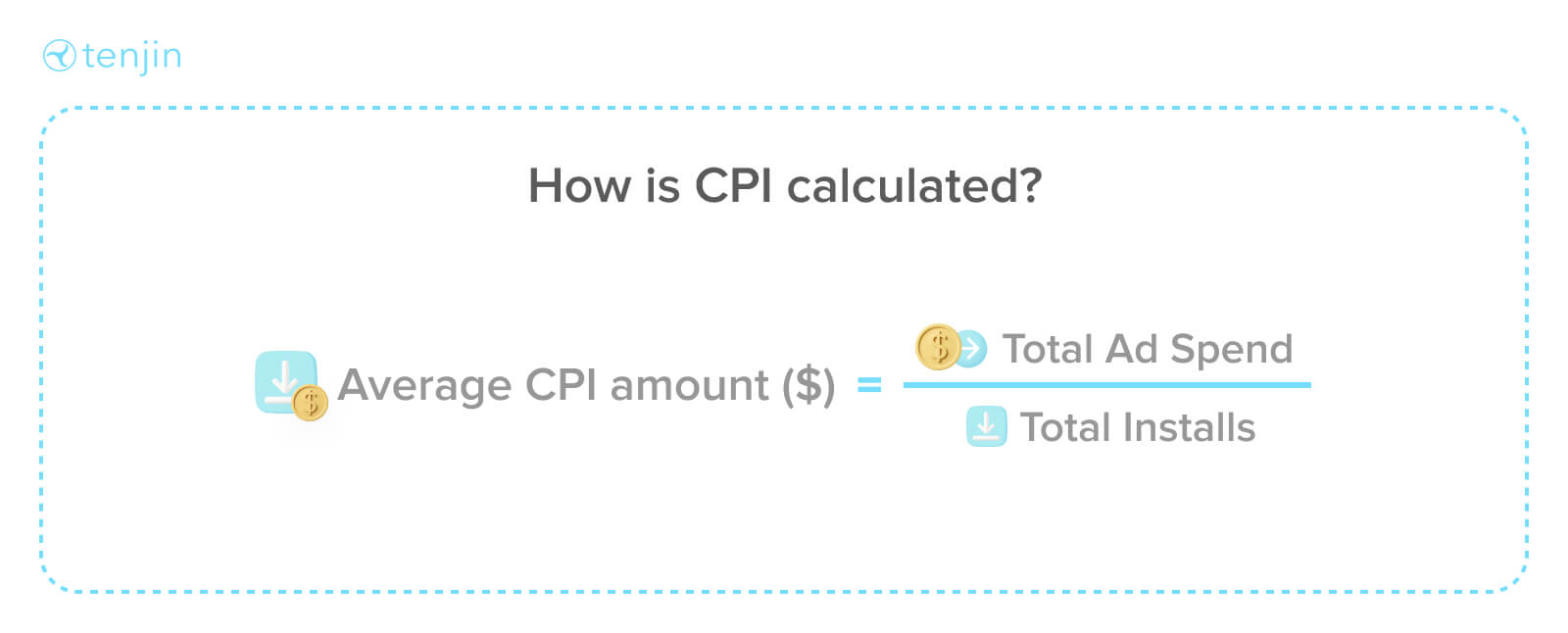
計算は簡単です:
数式:
Average CPI ($) = Total Ad Spend ÷ Total Installs
例:
$10,000を費やして実施したキャンペーンで5,000件のインストールが獲得できた場合:
CPI = $10,000 ÷ 5,000 = $2.00
そのキャンペーンの平均CPIは$2.00です。.
Tenjin では、2 つの CPI 指標が報告されます:
| Metric | 数式 |
| CPI | 広告費総額 ÷ 報告されたインストール総数 |
| tCPI | 広告費総額 ÷ 追跡されたインストール総数 |
この2つの違いは、報告データと追跡データの区別を反映しています。報告されたインストール数は広告ネットワークから提供されるものであり、追跡されたインストール数はTenjinが独自に記録したものです。これらを比較することで、実際の獲得コストについてより完全かつ正確な全体像を把握することができます。.
CPIに影響を与える要因とは?
CPIは固定された数値ではありません。さまざまな要因によって変動しますが、その中にはご自身でコントロールできるものもあれば、そうでないものもあります。.
プラットフォーム
iOSとAndroidのキャンペーンでは、通常、CPIに違いが生じます。iOSは、そのオーディエンスのプロフィールや、ATTがターゲティングの精度に与える影響により、これまでより高いCPIを記録してきました。.
地理
米国、英国、オーストラリアといった主要市場でのユーザー獲得コストは、競争が比較的緩やかな地域に比べて大幅に高くなります。国ごとのCPIのばらつきは、かなり大きい場合があります。.
広告ネットワークとチャネル
ネットワークごとに、広告在庫、オークションの仕組み、オーディエンスの質は異なります。同じアプリやクリエイティブであっても、チャネルによってCPIは異なります。.
ターゲット層の選定
ターゲット層が狭く、競争が激しい場合、その層にリーチするためのコストは高くなる傾向があります。ターゲティングの範囲を広げるとCPIは下がるかもしれませんが、その代わりに、ダウンストリーム価値の低いユーザーを集めてしまう可能性があります。.
クリエイティブ・パフォーマンス
広告クリエイティブは、クリック率やコンバージョン率に直接的な影響を与え、それがCPIにも反映されます。優れたクリエイティブは、実質的なインストール単価を引き下げます。.
App Store掲載の品質(ASO)
ユーザーが広告をクリックした後も、ストアページでコンバージョンに至らなければなりません。明確なスクリーンショット、高評価のレビュー、魅力的な商品説明を備えた、適切に最適化された商品ページは、コンバージョン率を向上させ、CPIを低下させます。.
CPIが重要な理由
CPIは、成長チームがユーザー獲得活動の効率性を評価する上で主要な指標の一つです。その重要性は、以下の点に表れています:
予算の効率性
キャンペーンやチャネルごとにCPIを追跡することで、どのチャネルで費用対効果の高いインストールが得られているか、またどこで過剰な費用がかかっているかがわかります。.
チャンネルの比較
CPIを利用すれば、さまざまなネットワーク、クリエイティブ、ターゲティング戦略におけるユーザー獲得コストを、同等の条件で比較することができます。.
App Storeでの露出
インストール数は、アプリストアのランキングアルゴリズムにおける重要な要素の一つです。どのキャンペーンが最も効率的にインストール数を伸ばすかを把握することで、認知度の向上と成長の両方に効果的に投資することができます。.
収益化計画
CPIは、この方程式における「獲得」側の要素です。自社の広告費が持続可能かどうかを判断するには、ユーザー1人あたりが生み出す収益と比較する必要があります。そこで重要になるのがLTVです。.
CPIとユーザー品質
CPIが低いからといって、必ずしも良いとは限りません。キャンペーンによって低コストでインストール数を増やせたとしても、そのユーザーがすぐに離脱し、一度もアプリを利用せず、収益も生まないような場合、その低いCPIは誤解を招くものです。.
CPIという指標について理解しておくべき最も重要な点の一つは、次の通りです: これはインストールにかかるコストを測定するものであり、ユーザーの価値を測定するものではありません。. CPIが高いキャンペーンであっても、定着率が高くライフタイムバリューの高いユーザーを獲得できれば、実際に重要なあらゆる指標において、より安価なキャンペーンよりも優れた成果を上げる場合が多い。.
CPIを評価する最も効果的な方法は、リテンション率、エンゲージメント、アプリ内収益、LTVといった下流のパフォーマンスデータと併せて分析することです。こうした包括的な視点から、ユーザー獲得が「効率的」に行われているのか、それとも単に「安価」に行われているのかがわかります。.
CPIの適正値とは?
CPIの基準値は、プラットフォーム、国、アプリのカテゴリー、収益化モデルによって大きく異なります。良いか悪いかを判断する普遍的な数値というものは存在しません。.
Tenjinでは、アプリカテゴリや市場ごとの実態を反映したCPIデータをまとめたベンチマークレポートを定期的に発行しています。これにより、自社の数値が他社と比べてどの程度なのかを把握し、どこに、どのように予算を配分すべきかについて、より的確な判断を下すことができます。.
CPIを向上させる方法
クリエイティブのテストと反復改善
広告クリエイティブは、CPIに影響を与える最も直接的な要因の一つです。フォーマット、メッセージ、ビジュアルについて定期的にテストを行うことで、最低のコストで最高のコンバージョン率を実現する要素を見極めることができます。.
ターゲティングを絞り込む
適切なターゲット層にリーチすることで、無駄な支出を減らすことができます。パフォーマンスデータを活用して、コンバージョン率の高いユーザーセグメントを特定し、そこに予算を集中させましょう。.
App Storeの掲載情報を最適化しましょう
ストアページは、クリックがインストールにつながる場所です。スクリーンショット、プレビュー、評価、説明文を改善することで、インストールへの転換率、ひいてはCPIを直接向上させることができます。.
CPIとtCPIの比較
Tenjinで報告されたインストール数と追跡されたインストール数の両方を監視することで、不一致を早期に発見し、ユーザー獲得コストデータの正確性を確保することができます。.
インストールだけにとどまらない
CPIをリテンション率やLTVのデータと組み合わせて分析し、ユーザーの質を犠牲にしてまで安価なインストール数を追求するような最適化を行っていないかを確認しましょう。.