Definition:
ROI stands for Return on Investment. It measures the profitability of an investment as a percentage, calculated by dividing net profit by investment cost. In mobile app marketing, ROI shows whether your user acquisition spend is generating more revenue than it costs.
Formula:
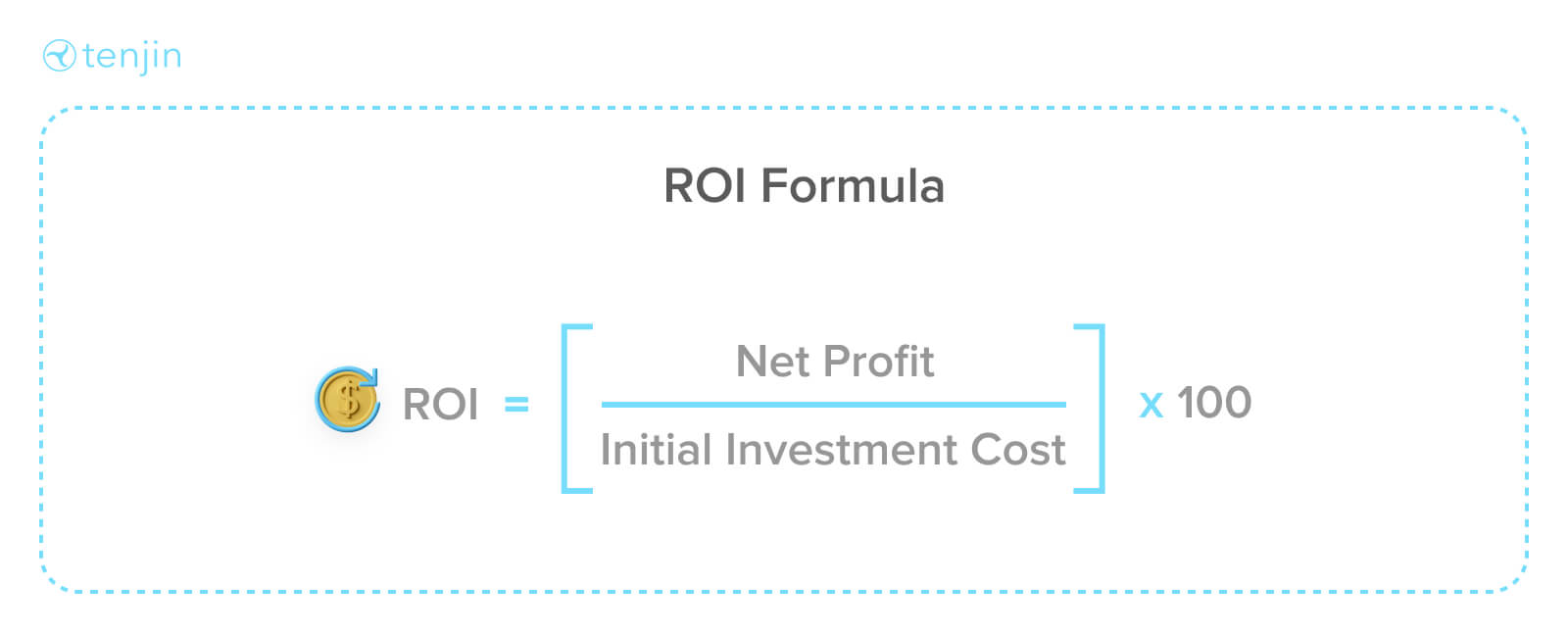
ROI (%) = (Net Profit / Investment Cost) x 100 Where Net Profit = Total Revenue − Investment Cost N-Day ROI = ((Total Revenue N Days After Install − Spend) / Spend) x 100
Why It Matters:
Return on investment is important because it tells you whether your marketing budget is generating profit. It helps app marketers compare campaigns, allocate spend efficiently, and track long-term performance across user cohorts.
ROI Meaning
Return on investment (ROI) is a metric that measures the profitability of an investment. Expressed as a percentage, it tells you how much you gained or lost, relative to what you spent. mobile marketing, a positive ROI means your investment is generating more than it costs. A high ROI signals a healthy, efficient strategy.
What Does ROI Stand For?
ROI stands for Return on Investment. It's one of the most widely used performance metrics in business, finance, and marketing. Whether you're evaluating an ad campaign, a product feature, or a user acquisition strategy, ROI gives you a clear, comparable snapshot of efficiency.
In mobile app marketing specifically, ROI tells you whether the money spent acquiring and retaining users is actually coming back.
Return on Investment Definition
Return on investment measures the ratio between net profit and the cost of an investment. It answers a simple but critical question: is this worth it?
A positive ROI means your investment is paying off. A negative ROI means you're spending more than you're earning. Understanding your ROI helps you make smarter decisions about where to put your budget and where to pull back.
How Do You Calculate ROI?
ROI is calculated by taking the net profit of an investment and dividing it by the initial investment cost. The formula is as follows:

The standard ROI formula is:
ROI (%) = (Net Profit / Investment Cost) x 100
Where:
Net Profit = Total Revenue − Investment Cost
ROI example:
An app studio spends $1,000 on a user acquisition campaign. The campaign generates $1,500 in revenue.
-
Net Profit = $1,500 − $1,000 = $500 -
ROI = ($500 / $1,000) x 100 = 50%
A 50% ROI means you earned $0.50 for every $1 spent. A strong result worth scaling.
What Is a Good ROI?
What counts as a good ROI depends entirely on context. Generally speaking:
- A positive ROI means your investment is profitable — you're earning more than you're spending.
- A high ROI indicates strong efficiency meaning your spend is generating significant returns.
- A low or negative ROI is a signal to investigate. It doesn't always mean a campaign is failing, but it does mean something needs attention.
In mobile app marketing, benchmarks vary by genre, platform, and monetization model. Rather than chasing an industry average, the goal is to improve your ROI over time using accurate, granular data.
This is where a mobile measurement partner like Tenjin becomes useful.
Why Is Return on Investment Important?
ROI is important because it cuts through the noise. Impressions, installs, and clicks are useful signals, but ROI tells you whether your marketing spend is actually building a profitable business.
Here's why it matters in mobile app marketing:
- Budget decisions: ROI helps you identify which campaigns, channels, and creatives deserve more spend — and which don't.
- Performance tracking: Monitoring ROI over time shows whether your strategy is improving or needs adjusting.
- Comparing investments: ROI gives you a common language to compare very different campaigns or channels side by side.
- Long-term planning: When you understand ROI across user cohorts, you can forecast future profitability with confidence.
Without ROI data, you're making decisions in the dark. With it, every budget call becomes more informed.
How is ROI Calculated in Tenjin
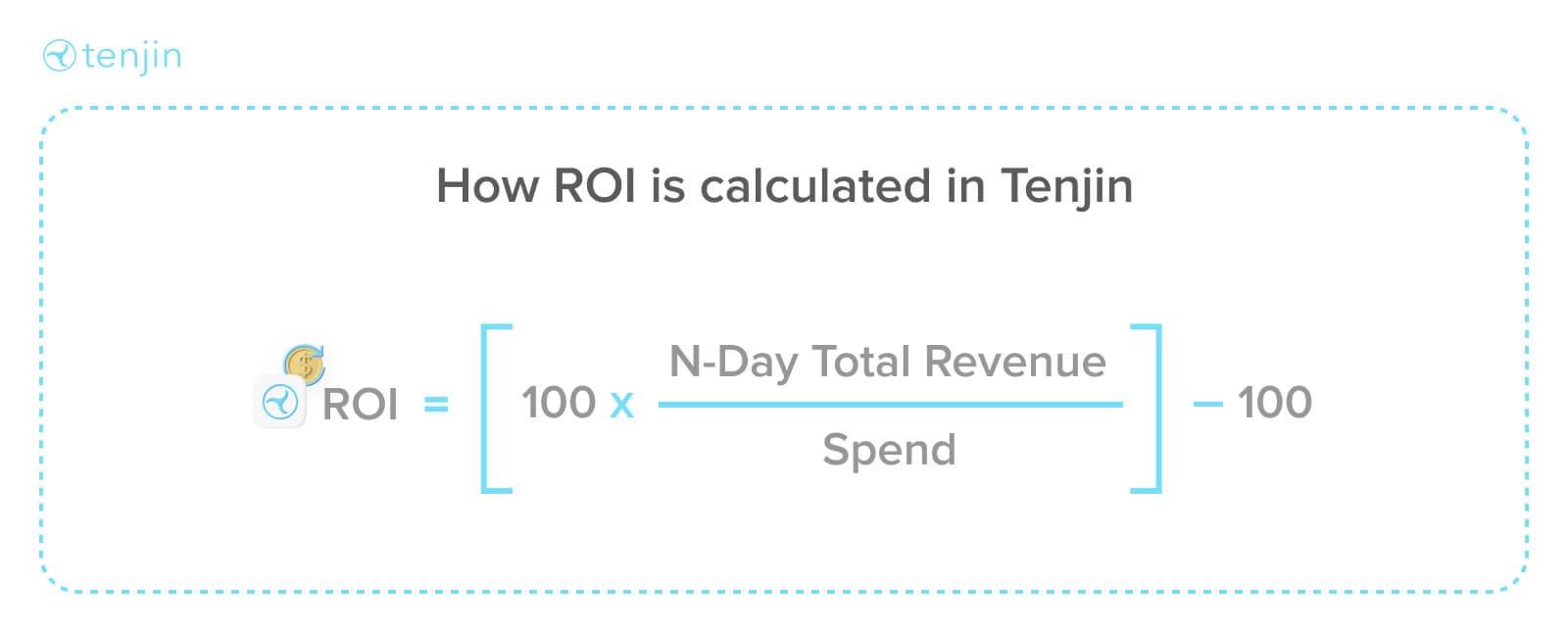
Tenjin calculates the average N-Day ROI percentage using the following formula:

N-Day ROI (%) = ((Total Revenue N Days After Install − Spend) / Spend) x 100
This cohort-based approach lets you track how ROI evolves over time, starting from Day 1 post-install through Day 7, Day 30, Day 90, and beyond. You can see exactly when a cohort of users becomes profitable, and use that insight to refine your acquisition strategy.
You can find the full list of ROI metrics available in the Tenjin Dashboard, and their descriptions, 这里.
One of the main limitations of calculating ROI is that it does not factor in the time value of money. This means that ROI does not take into account the length of time it takes for an investment to generate a return. Additionally, ROI does not factor in any associated costs or risks, such as transaction costs or market volatility. As such, ROI should be used as one of many metrics when evaluating investments.
What is Lifetime IAP ROI?
Lifetime IAP ROI measures the return on investment generated specifically by in-app purchases (IAPs) over the full lifetime of a user.
It answers the question: for every dollar spent acquiring this user, how much did they spend inside the app?
The formula Tenjin uses:

Lifetime IAP ROI (%) = ((Cumulative IAP Revenue − Spend) / Spend) x 100
This metric is calculated on a cohorted basis for a defined date range, giving you a precise view of long-term IAP profitability by acquisition source, campaign, or creative.
This is important because it allows you to:
- Identify your highest-value user segments
- Optimize UA spend toward users who convert and spend
- Understand the true long-term profitability of your IAP monetization strategy
什么 is Lifetime Ad ROI?
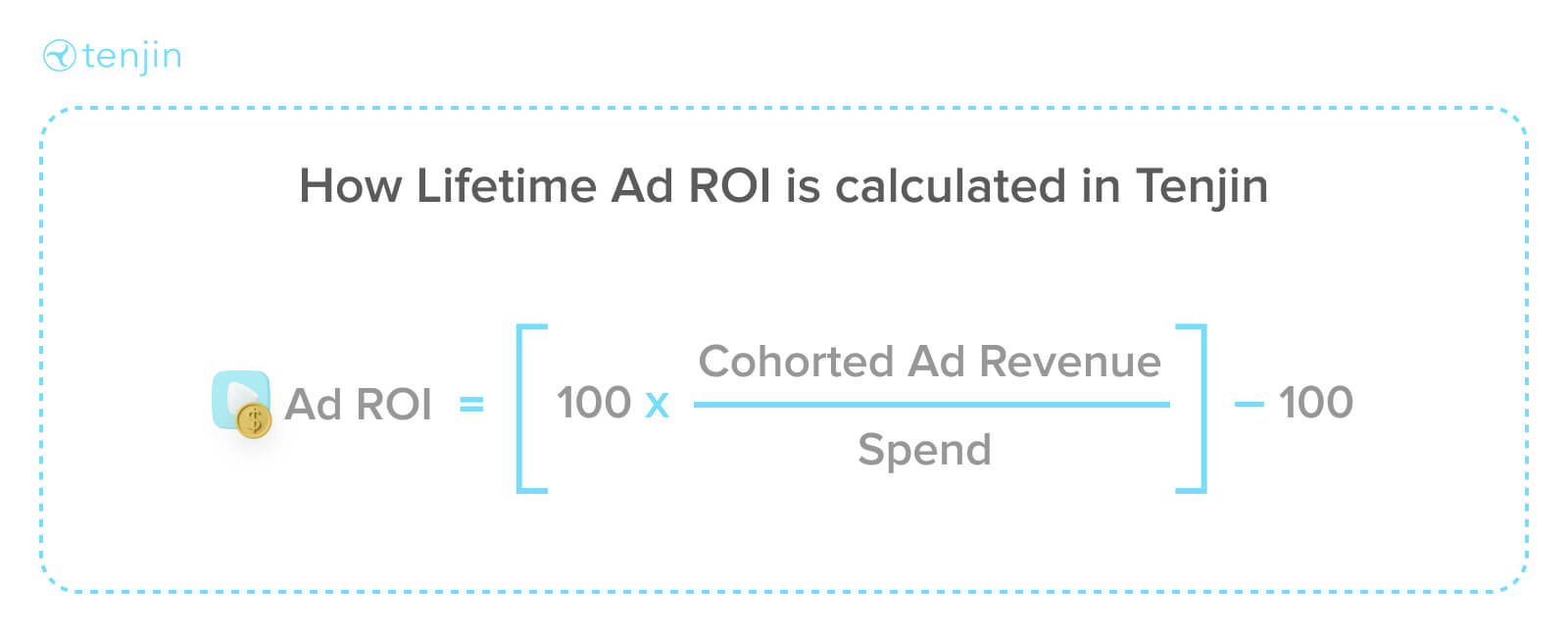
Lifetime Ad ROI measures the total return generated by ad revenue from users acquired through a specific campaign over their entire lifetime in your app.
The formula Tenjin uses:

Lifetime Ad ROI (%) = ((Cumulative Ad Revenue − Spend) / Spend) x 100
例如 A campaign costs $10,000 and generates $50,000 in ad revenue from acquired users over their lifetime. That's a Lifetime Ad ROI of 400%, which means that every $1 spent returned $5 in ad revenue.
This metric is especially valuable for apps running a hybrid monetization model, which combines a mix of revenues like IAP and ad revenue. Tenjin's dashboard supports hybrid monetization natively, so you can track both revenue streams together without stitching data from multiple tools.
Benefits of Tracking ROI
Tracking ROI consistently gives you:
- Clarity on what's working
- Smarter budget allocation
- Cohort-level insight
- A benchmark for growth
Limitations of ROI
ROI is powerful, but it works best alongside other metrics. A few things to keep in mind:
- It doesn't account for time. A 50% ROI over 3 months is very different from a 50% ROI over 3 years. Pair ROI with N-Day breakdowns to get a full picture.
- It doesn't capture risk. A high ROI campaign might be concentrated on a single channel, which is a vulnerability worth knowing.
- It needs accurate data. ROI is only as reliable as the revenue and spend figures feeding into it. Precise attribution matters.
That's why Tenjin pairs ROI tracking with granular attribution breakdowns, raw data exports, and DataVault.
Calculating ROI in Tenjin: A Practical Example
Imagine you're running two UA campaigns for a puzzle game:
| Campaign (广告计划) | Spend 花费 | D30 Revenue | D30 ROI |
| Campaign A | $5,000 | $6,500 | 30% |
| Campaign B | $5,000 | $4,200 | -16% |
At a glance, Campaign A is profitable and worth scaling. Campaign B is burning through the budget. Without ROI data at this level of granularity, you might have kept spending on both equally.
Tenjin surfaces these comparisons clearly, straight from the dashboard. No data team required.
Related Terms
- Lifetime Value / LTV
- 广告支出回报率(ROAS)
- Average Revenue Per User (ARPU)
- 每日活跃用户平均收入 (ARPDAU)
- 留存率
- 什么是移动营销中的群组分析(Cohort Analysis)?
- 递增
常见问题解答
What does ROI stand for in business?
ROI stands for Return on Investment. In business, it measures how much profit an investment generates relative to its cost. It's used across finance, marketing, and product development to evaluate whether a decision is paying off.
What is a positive ROI?
A positive ROI means your investment is generating more revenue than it cost. For example, if you spend $1,000 and earn $1,400 in return, your ROI is 40% — a positive result. In mobile marketing, a positive ROI signals that your user acquisition spend is profitable.
What is a high ROI?
A high ROI means your investment is generating strong returns relative to its cost. What counts as "high" depends on your industry and channel. In mobile app marketing, consistently tracking and improving ROI over time, rather than chasing a fixed benchmark, which is the more actionable goal.
Why is return on investment important in mobile marketing?
In mobile marketing, ROI tells you whether the money you spend acquiring users is coming back as revenue. It helps you identify which campaigns, creatives, and channels are profitable, so you can scale what works and cut what doesn't.
How is ROI different from ROAS?
ROAS (Return on Ad Spend) measures revenue generated per dollar of ad spend, without accounting for other costs. ROI is broader because it factors in net profit, meaning it accounts for all costs against total revenue. ROI gives you a fuller picture of true profitability.
What is Lifetime IAP ROI?
Lifetime IAP ROI measures the return on investment generated by in-app purchases over a user's lifetime. It's calculated by dividing cumulative IAP revenue minus spend by spend. It helps app developers understand the long-term value of their paying users and optimize acquisition strategies accordingly.
What is Lifetime Ad ROI?
Lifetime Ad ROI measures the return generated by ad revenue from users acquired through a campaign, over their full lifetime in the app. It's particularly useful for apps using a hybrid monetization model combining ads and in-app purchases to evaluate total user value.