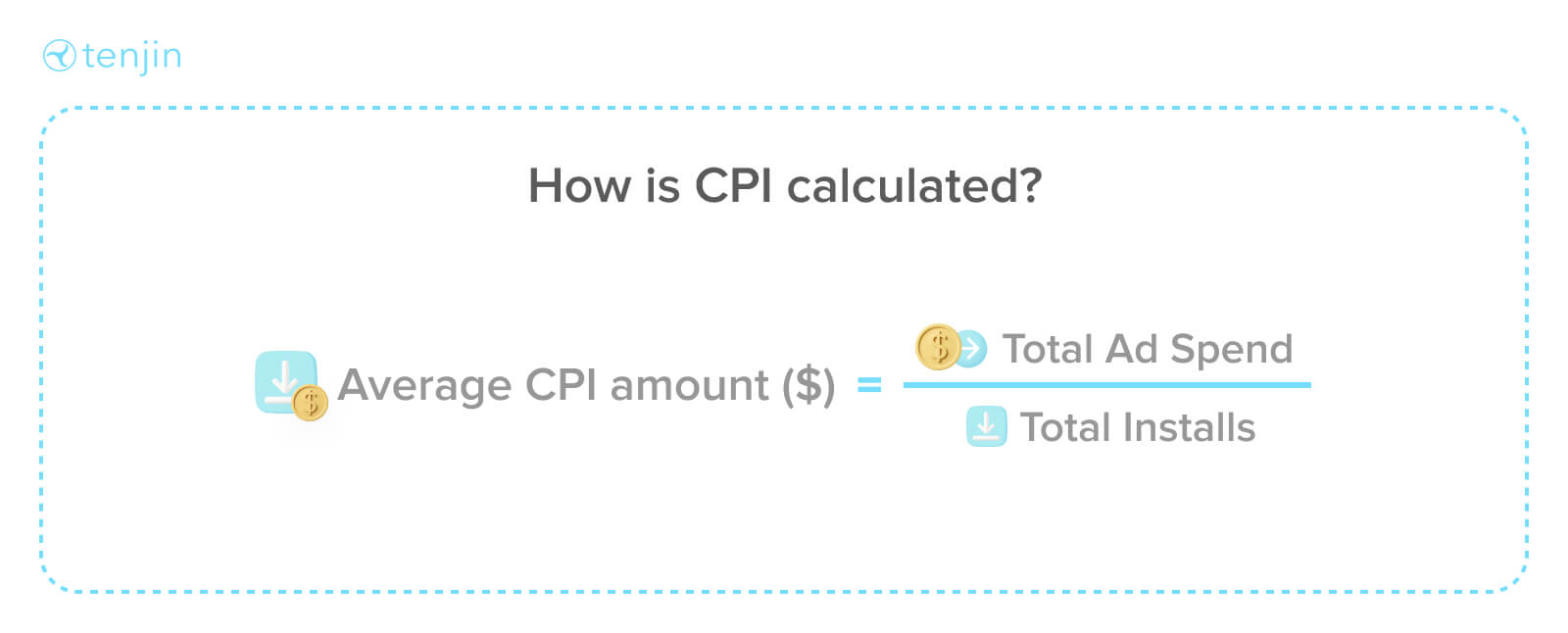
单次安装成本(CPI)指用户每次安装广告主的移动应用时,广告主向广告渠道支付的金额。平均CPI通过将总广告支出除以总安装量计算得出。
单次安装成本(CPI)如何使用?
Cost-per-install or CPI is one of the main metrics used in pricing models for mobile app advertising. This is a set fee, and is typically only charged when the user installs and opens the app for the first time after clicking on the ad.
CPI(单次安装成本)是一种有效的应用安装推广方式,它能让广告主更精确地追踪广告支出的投资回报率,并据此优化广告投放策略。
单次安装成本(CPI)会因广告渠道或发行商、目标受众以及应用市场的竞争状况而有所不同。广告主可通过以下方式优化CPI:将广告精准投放至最相关受众群体、 测试 不同广告素材,并优化应用商店展示页面以提升转化率。
如何计算 CPI?
平均 CPI(美元)=总广告花费(美元)/总安装量
In your Tenjin reports, you'll see 2 different CPI metrics: CPI = Total Ad Spend 广告消耗 / 总 Reported installs 报告安装 tCPI = 总 Ad Spend 广告花费 / 总 Tracked Installs | 追踪激活
为什么计算 CPI 很重要?
对于希望推广应用,提升下载量的公司或应用程序开发者来说,实时监测单次安装成本非常重要。有以下原因:
-
- 成本效益:帮助确定最具性价比的获客方式。通过监测单次安装成本,公司可以评估不同广告系列和渠道的表现,选出单次安装成本最低的广告和渠道。
-
- 应用变现:安装成本直接影响应用收入。通过监测单次安装成本,公司才能确定 LTV 为多少才能达到盈亏平衡或实现期望的利润率。
-
- App store rankings: The number of app installs is a key factor in determining an app's ranking in the app store. By tracking CPI, companies can determine which advertising campaigns and channels are most effective in increasing their app installs, and which can improve their app store rankings and visibility.
-
- User retention: Measuring CPI can also help companies evaluate the quality of their app's users. If a company is acquiring low-quality users with a high CPI, it may result in poor retention rates and lower overall revenue. By focusing on acquiring high-quality users with a lower CPI, companies can improve user retention and generate more revenue over time.
如何判断我的 CPI 是否合理?
CPI 取决于许多因素(操作系统、国家/地区、应用类型等)。Tenjin 会定期发布基准报告,您可以根据这些报告来确定应用的获客成本是否合理。点击此处获取报告。