
Tara Meyer
Si eres desarrollador de aplicaciones o profesional del marketing y obtienes ingresos a través de la publicidad en aplicaciones (IAA), probablemente ya conozcas el reto: ¿cómo calcular con precisión los ingresos publicitarios cuando las cifras no siempre cuadran?
Un panel de control puede mostrar $50 000 en ingresos publicitarios, mientras que otro muestra $48 000. Tu plataforma de mediación publicitaria muestra una cifra, pero las API de tu red publicitaria y de tus canales muestran algo completamente diferente. Cuando estas discrepancias alcanzan un rango determinado de entre 10 y 20%, ¿cómo se supone que debes tomar una decisión?… Y surgen muchas preguntas adicionales: ¿Qué dato sobre los ingresos es el correcto? ¿Dónde está la fuga de ingresos?
En esta guía, nuestro experto interno Anurag Mohan, director sénior de Éxito del Cliente en Tenjin, responde a estas y otras preguntas. Nos guiará a través de nuestro marco de trabajo contrastado y compartirá sus conocimientos sobre los siguientes temas:
- La atribución publicitaria como base
- Por qué Tenjin cuenta con más de una fuente de ingresos
- Cómo calcular los ingresos por cada fuente de IAA
- Las principales diferencias entre los métodos de cálculo y por qué son importantes
- Cómo utilizar el panel de control de resumen de ingresos para detectar solicitudes de anuncios no válidas
- Buenas prácticas para la detección y prevención de anuncios no válidos en dispositivos móviles
- Cómo el seguimiento de doble fuente mejora el retorno de la inversión publicitaria (ROAS)
Tanto si estás analizando los ingresos en tu panel de control general, resolviendo discrepancias en la API o protegiéndote contra solicitudes publicitarias no válidas, este marco te ayudará a elaborar informes con confianza y a proteger tus resultados financieros. Incluso compartiremos algunos casos de uso reales para demostrarlo.
La atribución de los ingresos publicitarios es la base
El cálculo de los ingresos de la IAA parte de un objetivo claro: atribución de ingresos publicitarios. Al vincular los ingresos a las campañas, redes publicitarias, y los creativos, podéis identificar qué canales generan un ROAS positivo. Esta visibilidad os permite eliminar el gasto innecesario, destinar el presupuesto a fuentes rentables y ampliar la captación de usuarios de forma estratégica.
¿Compras dentro de la aplicación? Muy sencillo. Un MMP Por ejemplo, Tenjin realiza un seguimiento de las instalaciones y todos los datos sobre ingresos te llegan directamente a través de tu aplicación.
Pero el tema principal de este artículo es la IAA, y eso se debe a que funciona de forma diferente a las compras dentro de la aplicación (IAP). Los anunciantes no saben cuántos ingresos publicitarios generan los usuarios que han captado. Los editores ven las impresiones y los ingresos, pero no pueden relacionarlos con campañas o redes concretas.
Aquí es donde la atribución de ingresos publicitarios aporta valor. Pero primero, veamos los pasos que hay que seguir para calcular nuestra IAA.
Por qué Tenjin cuenta con más de una fuente de ingresos
La mayoría de los socios de medición móvil (MMP) dependen de una única fuente de ingresos publicitarios. Esta única fuente contiene datos que se extraen directamente de plataformas de mediación publicitaria como AppLovin Max o Unity LevelPlay. Aunque esto te ofrece una visión única de tus ingresos publicitarios, combinar varias fuentes de ingresos publicitarios permite una validación más exhaustiva, una mejor detección del fraude y una optimización más precisa de las campañas.
Como MMP adaptada al modelo híbrido, Tenjin tiene un enfoque diferente. Anurag explica:
“Tenjin es, sin lugar a dudas, la única plataforma de gestión de medios (MMP) que ofrece esta flexibilidad y esta cobertura completa de todas tus fuentes de ingresos publicitarios. Por eso somos los únicos que, en nuestro panel de control, te ofrecemos la opción de consultar tanto los ingresos por mediación publicitaria como los ingresos procedentes de estas API de informes”.”
Calculamos los ingresos de la IAA teniendo en cuenta dos fuentes:
- Ingresos por mediación publicitaria se recoge directamente desde tu SDK de mediación a nivel de impresión, en tiempo real.
- Ingresos publicitarios a través de la API de Channels Se recopila a partir de las API de informes de las redes publicitarias y se asigna a tus campañas de captación de usuarios en función de las sesiones.
Al utilizar dos fuentes distintas de ingresos publicitarios —la mediación publicitaria y las API de canales—, se abren posibilidades y perspectivas más sólidas. Esto incluye la oportunidad de profundizar en los datos y descubrir oportunidades para optimizar las campañas, así como detectar diferentes tipos de solicitudes publicitarias no válidas antes de que causen problemas.
Cómo calcular los ingresos de la IAA: lo pensamos dos veces
Entender cómo calcular los ingresos procedentes de cada una de nuestras dos fuentes de IAA es fundamental para gestionar correctamente tus ingresos publicitarios y el panel de control general. Echemos un vistazo rápido a cómo funcionan ambas:
Cómo calcular los ingresos publicitarios a través de la mediación
- Captura a nivel de impresión
El SDK de Tenjin obtiene los ingresos publicitarios por impresión (ILRD) directamente desde tu SDK de mediación en tiempo real. Cada impresión publicitaria incluye datos sobre: a) el valor de los ingresos, b) el ID de usuario, c) la marca de tiempo y d) los detalles de la ubicación.
- Atribución a nivel de usuario
Dado que Tenjin ya ha realizado un seguimiento del usuario a lo largo del embudo de captación, asignamos los ingresos de cada impresión directamente a ese usuario concreto.
- Recopilación de campañas
A continuación, todos los ingresos a nivel de impresión se agregan a nivel de campaña, a nivel de canal y, finalmente, a nivel de aplicación.
“Podemos obtener esta impresión publicitaria y los ingresos publicitarios directamente del SDK de mediación y, como ya hemos identificado a ese usuario en el proceso de captación, simplemente le asignamos esos ingresos y los agregamos a nivel de campaña y, posteriormente, a nivel de aplicación”.”
Cómo calcular los ingresos publicitarios a través de la API de Channels
- Recopilación de datos
Tenjin accede a las API de todos tus canales de monetización (como Google AdMob, Unity Ads, ironSource, etc.) y recopila datos agregados sobre los ingresos a nivel de aplicación, país y fecha. Se basa en el número de sesiones.
- Asignación proporcional
A continuación, estos ingresos totales se distribuyen entre tus campañas de captación de usuarios en función del número de sesiones generadas por cada canal.
“Estos ingresos son tus pagos diarios, ¿verdad? Pues bien, se trata de los ingresos publicitarios reales que obtuviste en esa fecha concreta: el dinero que realmente entró en tu aplicación gracias a los anuncios que vieron los usuarios”.”
¿Por qué declarar más de una fuente de ingresos publicitarios de la IAA?
Si echas un vistazo al panel de control general de Tenjin, verás que mostramos tanto los anuncios Fuentes de ingresos comparadas en el informe de UA. Sin embargo, no consideramos que indicar dos fuentes de ingresos publicitarios sea redundante; hay una estrategia detrás de todo esto. Estas son las cuatro razones principales por las que decidimos calcular los ingresos de esta manera:
Atribución de los ingresos publicitarios
Puede que esto ponga de manifiesto tu valor, pero no existe una respuesta sencilla sobre cómo abordar la mediación publicitaria. Aunque no hay una solución universal, elegir el método de atribución adecuado es una prioridad, ya que determina tu marco de evaluación para medir todas las campañas publicitarias, creatividades, redes publicitarias y fuentes. El método que elijas influye directamente en la precisión de métricas clave como el ROAS y el LTV.
Además, la comparación cruzada de varios modelos de atribución mejora la precisión de los datos y permite un análisis más detallado del rendimiento.
Las referencias cruzadas y nuestra vista dividida destacada son precisamente la razón por la que hemos creado los ingresos de la IAA de esta manera. Esta vista dividida te permite realizar un seguimiento del LTV y otras métricas de campaña asignando valor a sesiones individuales. Dado que nuestra IAA cuenta con más de una fuente de ingresos publicitarios, esto significa que también podemos ofrecer dos tipos de LTV para los ingresos publicitarios.
Valor a lo largo de la vida (LTV) de la mediación publicitaria
Tu proveedor de mediación envía a Tenjin el importe de la puja correspondiente a cada impresión publicitaria. A continuación, Tenjin suma estos ingresos por usuario y los desglosa por canal de adquisición, campaña y país. Esto es directamente relacionadas con los ingresos por mediación publicitaria.
広告収益LTV
Este enfoque calcula los ingresos publicitarios utilizando los datos de sesión del SDK de Tenjin. A cada sesión del mismo usuario dentro del mismo canal, campaña y país se le asigna el mismo valor monetario. Este método es directamente relacionado con los ingresos publicitarios a través de la API de Channels.
¿Te gustaría saber cómo calculamos el valor de vida útil (LTV) de los ingresos basados en agregados? Lee nuestros casos prácticos con Kooapps y Hiperbarba para averiguarlo.
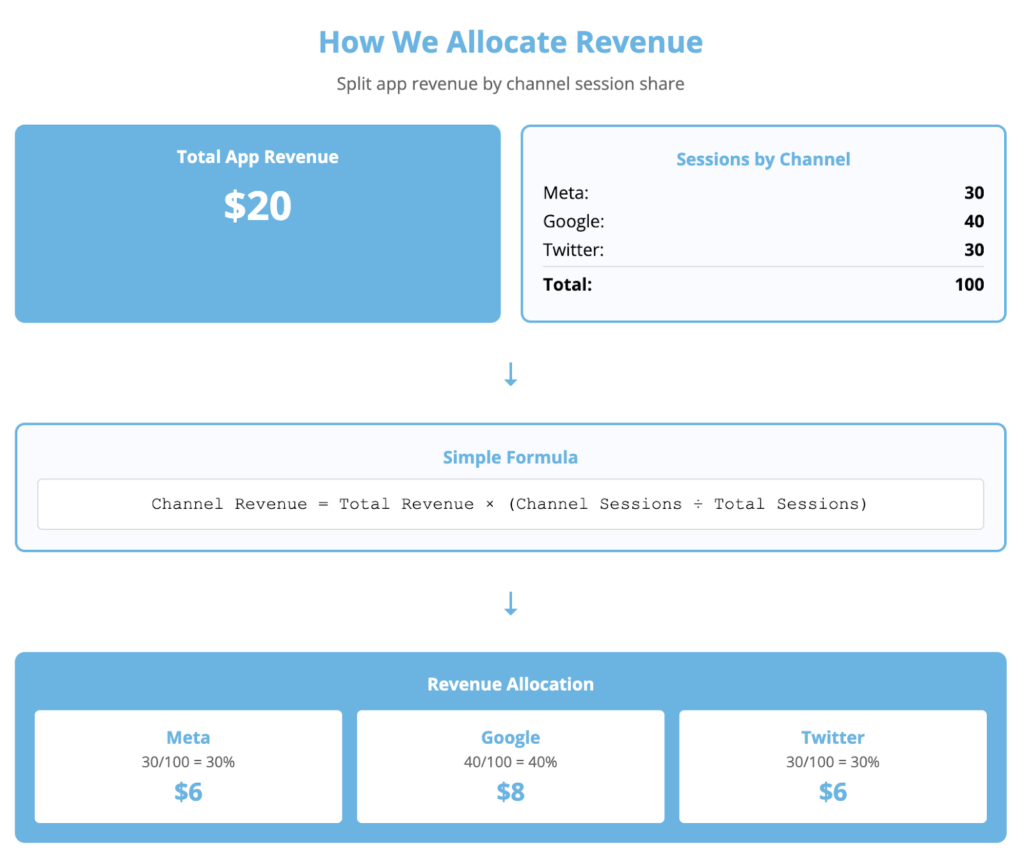
En nuestro cuadro de mando, puedes comparar las dos fuentes diferentes de ingresos publicitarios directamente con el LTV de las compras dentro de la aplicación, o en cualquier combinación que desees.
Detección de solicitudes de anuncios no válidas
Otra razón para utilizar dos tipos de flujos en nuestro IAA es poder tener en cuenta cualquier irregularidad entre ambos. Las grandes discrepancias pueden indicar que hay solicitudes publicitarias no válidas. Si se observan diferencias significativas entre los ingresos por mediación publicitaria y los ingresos publicitarios a través de la API de canales, esto suele ser un indicio de detección de fraudes. Como advierte Anurag:
“A veces se producen muchos casos de fraude a través de los canales de captación de usuarios… Si hay un número inflado de impresiones publicitarias generadas por un usuario fraudulento, tus ingresos por mediación publicitaria parecerán inflados. Sin embargo, los ingresos publicitarios a través de la API de canales… no se verán inflados, ya que se trata de los ingresos reales que has obtenido de estos usuarios”.”
Cuando los usuarios fraudulentos acceden a tu aplicación a través de canales de captación de usuarios comprometidos, suelen generar impresiones publicitarias infladas artificialmente:
- Ingresos por mediación publicitaria (del SDK) mostrará cifras infladas porque registra todas las impresiones, incluidas las falsas
- Ingresos publicitarios a través de la API de Channels (los pagos reales) mostrarán cifras exactas y más bajas, ya que las redes publicitarias solo pagan por las impresiones válidas
Señales de solicitud de anuncios no válidas:
- Discrepancias superiores a 15-20% entre las dos fuentes
- Campañas concretas que registran picos inusuales en los ingresos por mediación publicitaria
- Patrones de ingresos que no se ajustan a las métricas de comportamiento de los usuarios
Diferencias en la lógica de cálculo
Es importante comprender que es normal y previsible que exista cierta discrepancia entre ambas mediciones. “Ambas son precisas. Simplemente utilizan lógicas de cálculo diferentes”, aclara Anurag. “Así que no es necesariamente que una sea más precisa que la otra”. Más bien, subraya que:
“La idea es ofrecerte acceso y una visión general de todas las fuentes de ingresos publicitarios que existen”.”
Es normal que se observen algunas diferencias, ya que existen dos métodos de cálculo: el basado en sesiones y el basado en impresiones. Otra razón para las discrepancias puede ser tan simple como la diferencia horaria entre los proveedores de mediación y las redes publicitarias. Sin embargo, otra diferencia podría deberse a retrasos en los informes de la API o a los plazos de conversión de divisas. Todas estas parecen razones bastante razonables que explican por qué podría haber una diferencia en tus datos.
| Umbrales que requieren una actuación | |
| 0-10% | Variación normal, supervisar |
| 10-15% | Revisa la configuración de la integración y la zona horaria |
| 15-20% | Investiga a fondo |
| 20%+ | Posible fraude o problemas graves de integración |
El problema surge cuando hay más anomalías. Por ejemplo, cuando estas discrepancias entre los datos son de 15-20% o superiores, debería investigarse su validez. Sin embargo, puede que no siempre se trate de detectar un fraude. Los problemas de integración con el SDK de mediación podrían ser otra razón por la que existen diferencias importantes entre los tipos de ingresos declarados. Además de los problemas de integración, también habría que comprobar si faltan conexiones con redes publicitarias en los canales API. Por otra parte, también podría haber problemas con la forma en que se registran las sesiones.
Visibilidad integral de los ingresos
En ocasiones, puede haber redes publicitarias que no formen parte de tu estructura de mediación publicitaria. La API de Channels te garantiza que estás captando todas las fuentes de ingresos para obtener una visión más completa.
“Muchas veces puede que utilices redes publicitarias por separado, al margen del proveedor de mediación con el que trabajas”, explica Anurag. “Por ejemplo, puede que tu estructura no incluya esa red publicitaria en el lado de la mediación. Así que siempre es otra fuente de la que dispones y que puedes utilizar para ver de dónde proceden tus ingresos publicitarios”.”
Conclusiones prácticas
El cálculo preciso de los ingresos publicitarios no consiste solo en conciliar cifras. También se trata de proteger tu rentabilidad y tomar decisiones de crecimiento más acertadas.
Al aprovechar el seguimiento de ingresos de doble fuente a través tanto de la mediación publicitaria como de la API de canales, obtienes la visibilidad completa necesaria para optimizar el ROAS, detectar el fraude antes de que agote tu presupuesto y captar los ingresos de todos los canales de monetización de tu plataforma.
Cuando surjan discrepancias, ahora dispones de un marco de trabajo para investigarlas de forma sistemática, en lugar de basarte en conjeturas. Tanto si estás ampliando la captación de usuarios, como si te estás defendiendo de solicitudes publicitarias no válidas o, simplemente, intentas comprender de dónde proceden realmente tus ingresos, este enfoque basado en dos fuentes te da la confianza necesaria para actuar en función de tus datos.
- El seguimiento de ingresos de doble origen te ofrece una visibilidad completa de los ingresos y un sólido marco de detección de fraudes.
- Las diferencias entre ambas fuentes son normales, pero deben tenerse en cuenta. Cuando se producen grandes discrepancias, esto puede indicar un fraude, problemas de integración o fallos en las conexiones de red.
- Ingresos por mediación publicitaria es esencial para la optimización del ROAS en tiempo real gracias a sus datos a nivel de impresión y a las respuestas instantáneas de la red.
- Ingresos publicitarios a través de la API de Channels amplía el alcance al incorporar canales ajenos a tu pila de mediación, lo que mejora la exhaustividad de los ingresos y sirve como indicador de referencia.
¿Quieres ver este marco de trabajo en acción? Mira cómo nuestro equipo explica por qué a nuestros clientes les encanta nuestra forma de calcular los ingresos por compras dentro de la aplicación: