Tabarak Paracha
En esta entrada del blog hemos entrevistado a Ashley Black, una antigua empleada de Google con casi una década de experiencia al frente del equipo de ventas de App Ads, sobre cómo las pequeñas empresas y los desarrolladores independientes pueden sacar partido a Google Ads para móviles, destacando aspectos que a menudo se pasan por alto.
[Roman, de Tenjin]: Hola a todos, bienvenidos a otra entrega de «ROI 101». Hoy vamos a hablar de Google Ads. No solo de Google Ads, sino de cómo las pequeñas empresas y los desarrolladores independientes pueden sacarle partido. Hoy cuento con una invitada especial para hablar de ello: Ashley, de Candid Consulting. Ashley, por favor, preséntate.
[Ashley, de Candid Consulting]: Hola, soy Ashley. Creo que lo que me hace estar cualificada para hablar de este tema es que trabajé en Google durante casi 10 años. Dirigí el equipo de ventas de App Ads en Google durante casi 6 años, donde mi equipo prestaba apoyo a los equipos de captación de usuarios, principalmente de empresas de videojuegos para móviles. Hace unos cuatro meses dejé la empresa y fundé Candid Consulting, donde asesoro a muchos pequeños desarrolladores sobre cómo pueden ejecutar de la mejor manera posible una estrategia de adquisición de usuarios tanto en Google Ads (en los modelos iOS y Android) como en otras plataformas.
[Roman, de Tenjin]: Sí, exactamente. ¿Quién más, aparte de un ex empleado de Google, puede explicarnos todos los entresijos de las campañas de Google? Le he pedido a Ashley que nos prepare unas diapositivas. Empezaremos por los conceptos más básicos de la estructura de las campañas de Google Ads y luego pasaremos a temas más avanzados. Nos centraremos en las pymes, los desarrolladores independientes y demás. Voy a compartir mi pantalla ahora mismo.
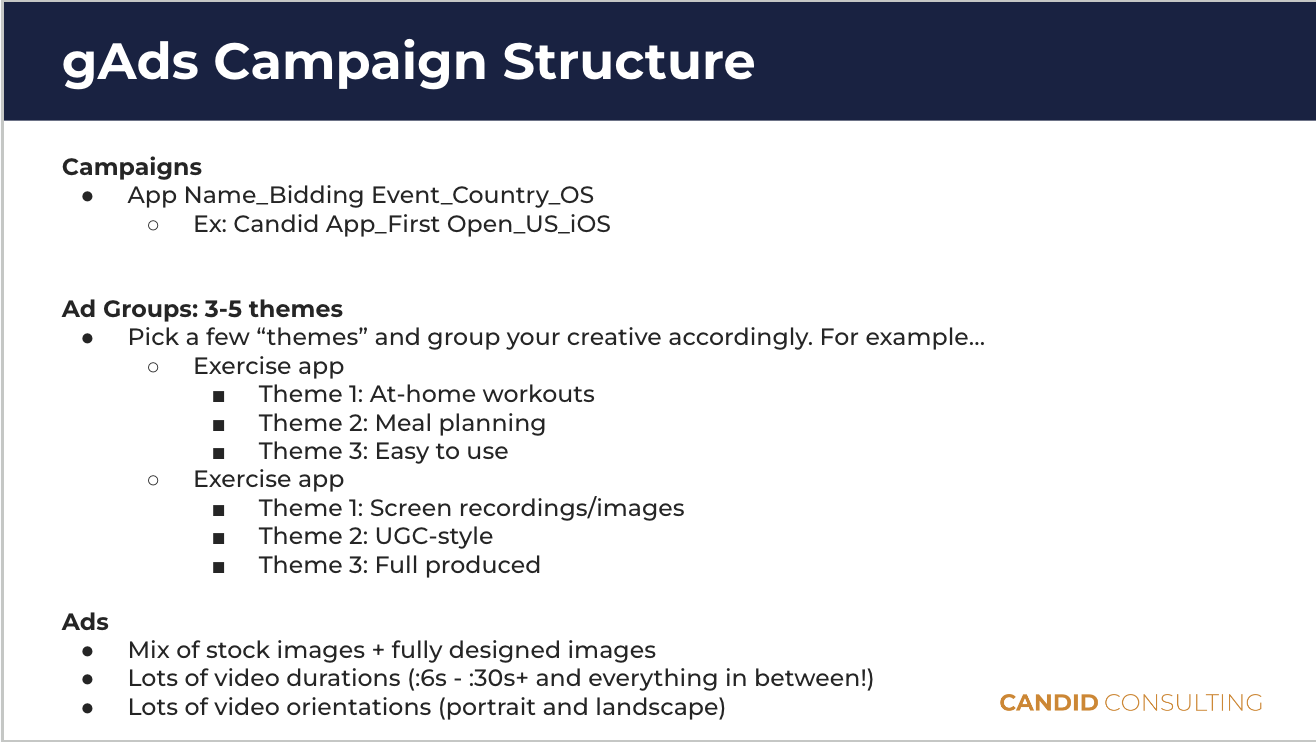
[Ashley, de Candid Consulting]: Si aún no has hecho publicidad con Google, o quizá hayas probado antes en Meta, la estructura de Meta y Google es, en realidad, muy, muy similar. En Google tienes una campaña, que es el nivel más alto. Y ahí es donde estableces tu puja para el objetivo hacia el que quieres que se optimice tu campaña. Y algo que he observado que hacen muchos desarrolladores más pequeños cuando configuran sus campañas por primera vez es que, en cierto modo, se limitan a utilizar la opción predeterminada que ofrece Google, que es “Campaña de aplicaciones n.º 1”. Y lo que de verdad quiero que la gente empiece a plantearse es que, cuando empieces a expandirte con Google o cualquier otra plataforma, cómo vas a analizar los informes de esos datos. Y cómo vas a diferenciar una campaña de otra. Así que mi recomendación —y creo que todos los equipos de adquisición de usuarios más grandes siguen una convención de nomenclatura muy similar— es incluir el nombre de la aplicación, los eventos por los que pujan —porque a veces puede haber una campaña de primera apertura, otras veces una métrica de retención o un objetivo por el que se puja, o una compra que indique exactamente en qué evento se está pujando—, el país al que se dirige y también el sistema operativo. La razón por la que incluyo muchos de estos datos es que Google dificulta mucho la extracción de esta información en los informes. Por eso utilizo estas convenciones de nomenclatura específicas para las campañas.
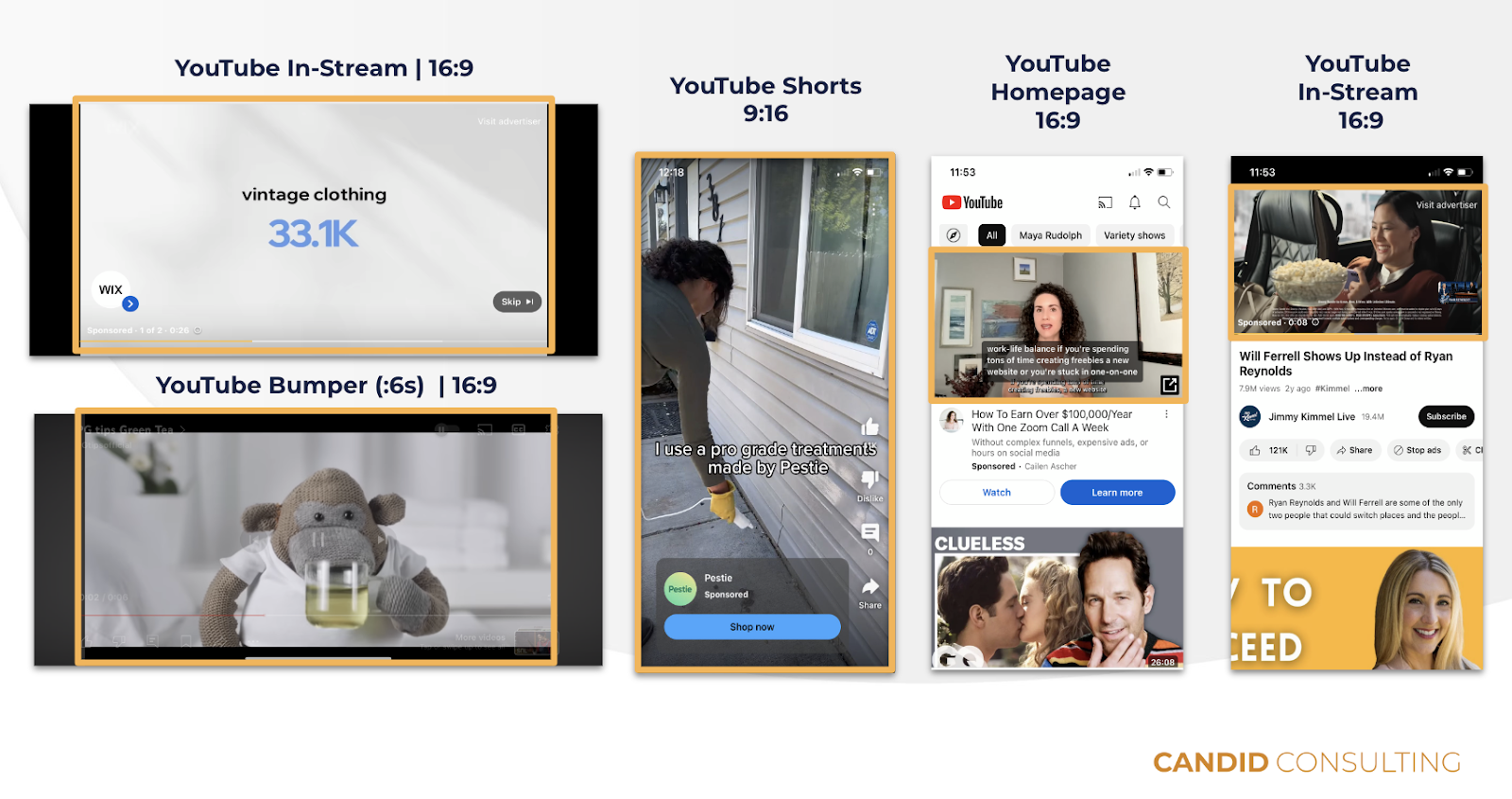
Y luego, el siguiente nivel son los grupos de anuncios. Ahí es donde tienes la oportunidad de describir los temas de los recursos que incluyes en las campañas. Por eso, suelo animar a la gente a ceñirse a entre 3 y 5 temas. Puedes pensar en ellos como las funciones de tus aplicaciones para las que has creado los recursos, o el estilo del vídeo o de los recursos que has diseñado. De esta forma, tienes la oportunidad de ver qué es lo que realmente cala hondo en el público. El ejemplo que pongo aquí es una aplicación de ejercicio físico. Quizá tu primer grupo se llame “entrenamientos en casa” y todo el texto que contenga sea del tipo “ahorra dinero en el gimnasio” o “haz ejercicio desde tu salón”, y así sucesivamente. Los recursos gráficos y los vídeos se corresponden con eso. Y lo mismo ocurre con los otros dos, como la planificación de comidas o la facilidad de uso. Y lo que empezarás a observar es que ciertos grupos de anuncios tendrán más éxito. Por ejemplo, quizá “entrenamientos en casa” reciba una inversión mucho mayor. Así es como puedes deducir que eso es lo que le gusta al algoritmo, que parece que está calando entre el público, y entonces puedes ampliar esa estrategia y optimizarla en consecuencia.
[Roman, de Tenjin]: ¿Hay casos en los que el nombre de mi campaña pueda ser demasiado largo?
[Ashley, de Candid Consulting]: Yo lo pienso todo en hojas de Excel. Pienso en cómo puedo dividir fácilmente los datos al exportarlos para poder crear sin problemas una tabla dinámica. Así es como funciona mi mente. Y por eso utilizo el guión bajo. Además, me gusta que todo sea muy coherente, para que todo quede alineado en las celdas correctas.
Y los informes de Google no son muy buenos en muchos casos. Por eso te digo que te hagas un favor y lo hagas bien desde el principio, para no tener que volver atrás y rehacerlo todo más adelante.
[Roman, de Tenjin]: ¿Tiene sentido alguna vez reiniciar la misma campaña? Es decir, la detienes porque no estaba dando los resultados que esperabas y luego la vuelves a poner en marcha más tarde para, quizá, ajustar el algoritmo.
[Ashley, de Candid Consulting]: Sí, creo que si le preguntas a un representante de Google o si me lo hubieras preguntado hace cuatro meses, cuando todavía trabajaba allí, te habría dicho que no, que no deberías hacerlo. Pero, desde mi experiencia práctica, he visto que a veces funciona, ya que creo que el algoritmo se «cansa» en un momento dado y piensa: «Vaya, esto está obsoleto». Así que, de hecho, si lo relanzas, a veces puedes ver cómo vuelve a repuntar. No diría que sea necesariamente una buena práctica, pero si estás en un aprieto, he visto que realmente funciona.
Mira el vídeo completo que aparece arriba para ver la conversación al completo.