
Tara Meyer
septiembre 9, 2026
Mobile cost aggregation brings ad spend from the networks and platforms a team uses into one standardized reporting view and it is a core part of a mobile measurement partner (MMP). This comparison looks at how Singular and Tenjin approach cost aggregation, using only information each company publishes about its own product, including product pages, help documentation, and pricing pages.
In particular, we compare cost aggregation factors that are useful in day-to-day decision-making: supported sources, data normalization, reporting granularity, access to underlying data, and pricing structure.
Índice
- Why Mobile Cost Aggregation is Difficult
- What is Mobile Cost Aggregation?
- Singular’s Cost Aggregation
- Tenjin’s Cost Aggregation
- Singular vs. Tenjin: Cost Aggregation Compared
- Key Differences in Mobile Cost Aggregation
- Which Cost-Aggregation Platform Fits Your Company?
- How To Evaluate A Cost Aggregation Platform
- PREGUNTAS FRECUENTES
- Conclusiones
Why Mobile Cost Aggregation is Difficult
Cost aggregation becomes difficult for many mobile growth teams when there is no comparable view of ad spend data. Spend is usually spread across ad networks, agencies, and platforms. Each source has its own campaign structure, currency, reporting delay, and available dimensions.
Pulling numbers from these sources and consolidating them is just the first step. The second stage is making sure all the data is normalized and standardized so they can be compared. After data has been standardized, it should connect to attributed installs, revenue, and ROAS in order to see which campaigns are creating value.
The main goal of mobile cost aggregation is to turn fragmented spend data into a consistent view of acquisition cost and return. Singular and Tenjin are two MMPs that help app businesses bring together this data. However, each has their own approach: they differ in scope and the type of workflows they prioritize.
What Is Mobile Cost Aggregation?
Mobile cost aggregation is the process of collecting ad spend, clicks, impressions, and campaign metadata from multiple advertising sources, standardizing that data, and connecting it to attribution and revenue data. The goal is a clear, comparable view of CPI, ROAS, and LTV across every channel a team runs. The quality and practical application of cost aggregation depends on three key elements:
Coverage
Can the platform retrieve cost data from the specific channels a company actually uses, including smaller or regional networks?
Normalization
Can teams compare campaigns side by side despite different source formats, currencies, and naming structures? This is the core of cost data normalization: turning inconsistent raw data into a consistent, comparable form.
Connection to Outcomes
Can spend be reliably viewed next to attributed installs, revenue, subscriptions, or ad monetization, not just impressions and clicks?
Singular’s Cost Aggregation
Singular is positioned around broad marketing analytics, and cost aggregation is a part of that. The platform states that it aggregates cost, performance, and campaign metadata from more than 1,200 sources, with coverage that extends beyond mobile into web, CTV, PC, console, offline media, and agency-managed spend.
That breadth shows up in how Singular’s reporting works. Teams can build custom dimensions and creative reports, then configure reports around their own marketing structure rather than a fixed template. Cost data can be joined with attribution to produce a cross-channel view of return on ad spend, which is useful for companies running acquisition across many different customer journeys at once. Data access includes reporting APIs, exports, and ETL options, which support teams that want to move cost data into their own warehouse or BI tools.
This depth is useful when a company needs to reconcile spend across non-mobile channels or report on marketing performance company-wide. A retail app running TV and offline campaigns alongside mobile UA, for example, may need exactly this kind of cross-platform reconciliation.
For a mobile-first company with a narrower media mix, the distinction is not whether it can access metrics such as CPI, ROAS, or LTV. All platforms support those core measurement needs. It is the range of sources those metrics need to cover. If most acquisition spend runs through mobile ad networks and the team is evaluating it against app revenue an omnichannel aggregation layer may bring in sources that the workflow does not need. In those instances, a mobile-first cost aggregation workflow may be a better match.
The question becomes less about supporting use cases, but a whether cross-platform scope maps to the channels the app uses.
Tenjin’s Approach To Mobile Cost Aggregation
Tenjin’s approach starts from a more specific problem: what does a mobile app team need to make decisions about UA spend and app performance?
Tenjin pulls ad spend data across 1,000+ ad-network integrations and standardizes it into campaign, channel, geo, and cohort reporting. That cost data sits alongside attribution, in-app purchase revenue, ad revenue, LTV, ROAS, and predictive LTV (pLTV), so a team can see not just what was spent, but what it produced.
This matters most for gaming and hybrid-monetization apps, where revenue rarely comes from a single source. A campaign’s real performance depends on IAP revenue, ad revenue, and how the two blend together over a player’s lifetime, not installs alone. For subscription apps, costs are evaluated against trials, new subscriptions, renewals, cancellations, and subscription revenue, as well as Tenjin’s RevenueCat and Adapty integrations.
For teams that want to work with their own data directly, Tenjin provides raw data exports directly from their dashboard, reporting and campaign-management APIs, ETL, and a managed data warehouse. These flexible options do no limit cost reporting to a dashboard. Teams can build their own analysis and reporting workflows on top of the same underlying data in their own BI tools if desired.
Tenjin designs around the operating needs of mobile-first teams: bringing campaign cost, attribution, and monetization data into a usable reporting workflow without requiring a broad cross-platform analytics implementation.
Singular vs. Tenjin: Cost Aggregation Compared
Singular and Tenjin can both aggregate and normalize cost data. Where they differ is in scope, and in how much configuration a team needs to do to get useful ROAS reporting out of that data.
| Cost-aggregation consideration | Singular | Tenjin |
| Data-source scope | Broad marketing data ingestion, including mobile and non-mobile channels | Mobile-first ad spend reporting across 1,000+ integrations |
| Mejor caso de uso | Companies reconciling costs across a wide, cross-platform marketing mix | App businesses connecting mobile UA spend to app performance and monetization |
| Reporting and data workflows | Custom dimensions, reporting views, creative analysis, APIs, and ETL options | Mobile reporting plus raw-data exports, DataVault, APIs, and MCP-enabled workflows |
| Revenue context | Connects cost and attribution for broader marketing ROI analysis | Connects cost with attribution, IAP, ad revenue, subscriptions, LTV, pLTV, and ROAS |
| Data access | Reporting APIs, exports, and ETL options | Raw data, reporting APIs, campaign-management APIs, ETL, and DataVault |
| Operational fit | Useful when cross-platform reporting scope and configurable workflows are priorities | Useful for mobile teams that need direct, actionable reporting and data access |
The primary difference is not whether either platform can aggregate cost data. It is how much breadth, customization, and operational complexity a company needs around that core task.
Key Differences in Mobile Cost Aggregation
Cross-Platform vs Mobile-First Focus
Singular fits if cost reporting needs to span mobile plus web, CTV, PC, console, offline, or agency-managed data.
Tenjin suits mobile-first teams focusing on mobile UA and app monetization are the primary decisions.
Neither MMP is a universal answer. The right choice really depends on where the majority of spend and reporting needs actually sits.
Configurability vs Lower Operational Overhead
Singular’s reporting flexibility is valuable for sophisticated analytics teams that need to build custom structures. But not every company needs to configure reporting from scratch or reconcile every possible marketing source.
Tenjin focuses on mobile-first teams and subscription-based apps that want flexibility, precision, control, and reliable mobile cost data connected to outcomes, without taking on extra complexities they will not use.
Cost Data Connected to the Right Revenue Model
The right comparison depends on how a team makes money. Gaming and hybrid-monetization teams typically need cost measured against IAP revenue, ad revenue, LTV, and ROAS. Subscription apps need cost measured against trials, subscriber conversion, renewal revenue, and cancellations. Tenjin’s comprehensive plans include these features.
Larger cross-platform consumer companies may need a broader view of acquisition cost across multiple customer journeys, which points back toward Singular’s wider scope.
Packaging and Predictable Access
Both platforms offer a free entry point that includes cost aggregation. The main difference is access to the product and customer support.
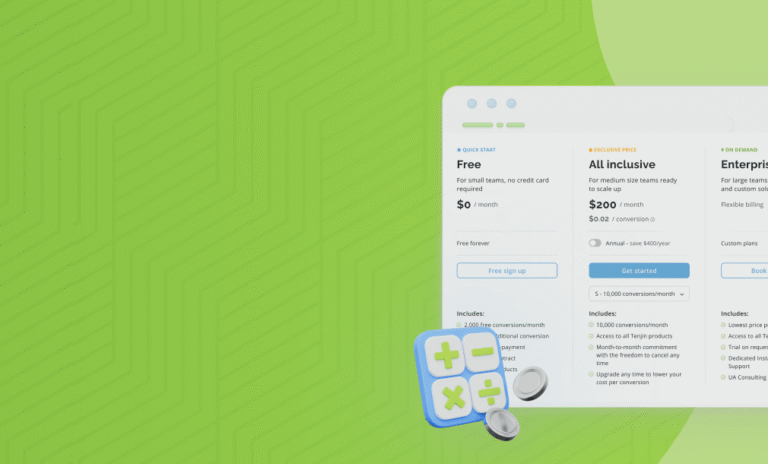
Tenjin includes its core product suite across every plan, including All-Inclusive Free. This includes raw data, APIs, and email and instant-messaging support, alongside published conversion.based pricing from free through standard paid tiers. All teams can contact Tenjin’s customer support for technical help, setup questions, or account queries through email, in-dashboard chat, and use the searchable Help Center for self-service guidance.
Singular’s Free plan includes cost aggregation. Its public pricing page lists technical support, access to a customer experience team, and one-to-one-solutions-engineer onboarding available only with paid plans, starting with the Growth plan as a benefit. It also lists automated data exports as an optional add-on. This model model may suit teams that prefer to add services and costs as their requirements grow.
For teams comparing platforms, the relevant question is not whether a free plan exists, but rather if the data access, onboarding, and the support they expect to use are already included in the plan they’re evaluating. Tenjin’s all-inclusive approach and packaging makes those core capabilities available from the stat, which can make the total cost and operating model easier to assess before committing.
For a closer look at how the platforms compare on attribution specifically, see another Appsflyer vs. Adjust vs. Singular vs. Tenjin attribution comparison.
Which Cost-Aggregation Platform Fits?
| Company Need | May Be a Better Fit | Why |
| Cost reporting must combine mobile with web, CTV, PC, console, offline, agency, or other non-mobile data sources | Singular | Its broader cross-platform marketing analytics scope may be more relevant. |
| The company needs broad cross-platform reporting, custom dimensions, or creative-analysis workflows across a large marketing mix | Singular | These needs align with Singular’s configurable reporting and creative analytics focus. |
| A mobile-first app business needs campaign cost, attribution, and revenue in one workflow | Tenjin | Tenjin is designed around mobile UA, attribution, cost reporting, and app-performance data. |
| A gaming or hybrid-monetization team needs to assess UA cost against IAP revenue, ad revenue, LTV, and ROAS | Tenjin | It connects acquisition cost with the app revenue metrics central to gaming and hybrid monetization. |
| A subscription app needs to assess campaign cost alongside trials, new subscriptions, renewals, cancellations, and subscription revenue | Tenjin | Tenjin’s subscription reporting and RevenueCat and Adapty integrations support this mobile subscription workflow. |
| A mobile-first company needs raw data, automated data pipelines, APIs, warehouse access, or custom reporting in its own BI tools | Tenjin | Tenjin provides raw-data access, DataVault, APIs, and automated data workflows for teams that want to use their own reporting environment. |
| A team wants to analyze mobile performance or manage related measurement tasks through an MCP-enabled AI workflow | Tenjin | Tenjin’s MCP Server supports conversational access to reporting and selected measurement operations. |
| A lean or scaling team needs full measurement capabilities with predictable, published conversion-based pricing | Tenjin | Tenjin’s all-inclusive plans include core product access without requiring feature-by-feature packaging decisions. |
| A global, multi-product business has complex mobile measurement needs but does not require broad non-mobile cost aggregation | Tenjin Enterprise | Company size alone does not require a cross-platform analytics platform. |
| A global, multi-product business needs to centralize cost and performance data across many device types and marketing channels | Singular | Its broad marketing-data scope may better match a genuinely cross-platform measurement requirement. |
Both platforms provide configurability and data access, or ways to move data beyond a standard dashboard. Singular offers configurable reporting, custom dimensions, reporting APIs, and data-destination options suited to broad marketing analytics environments. On the other hand, Tenjin provides raw-data exports, DataVault, automated data workflows, APIs, and MCP-based access for mobile teams that want to analyze, automate, and act on their data in their own tools.
The best fit really depends on if your cost aggregation needs extend beyond traditional beyond mobile acquisition and app revenue. If you need a broad a cross-platform marketing data environment, then Singular might have an advantage. For more mobile-focused cost aggregation and reporting workflows, then Tenjin has a better solution.
How To Evaluate A Cost Aggregation Platform
A few questions help clarify which approach fits before comparing platforms feature by feature:
- Which ad networks, agencies, and other spend sources do we need to cover today?
- Will we need web, CTV, PC, console, or offline data in the same reporting environment?
- At what level do we need to analyze cost: campaign, ad group, creative, geo, publisher, or cohort?
- Which revenue model must cost data connect to: IAP, ads, subscriptions, or a combination?
- Can our team realistically build and maintain highly customized reporting, or do we need something usable out of the box?
- Are raw data, exports, APIs, warehouse delivery, and support included in the plan we’re evaluating, or are they add-ons?
- What will the total cost look like as conversion volume and data needs grow?
Working through these questions first makes the platform comparison more useful, because the right answer depends on what a team actually needs to report on, not which platform has the longer feature list.
¿Preguntas frecuentes?
Both platforms collect and normalize advertising cost data, then connect it to performance outcomes. Singular focuses on broader, cross-platform marketing analytics, while Tenjin focuses on connecting mobile UA cost with attribution and app monetization data.
Both platforms support large integration ecosystems, but no headline number replaces checking the specific networks, agencies, and regional partners a company uses. Singular states it supports more than 1,200 cost-data sources, while Tenjin states it supports ad spend reporting for more than 1,000 ad-network integrations. Confirm coverage and available dimensions during the evaluation process.
Tenjin fits better if mobile UA, app revenue, and cohort performance are the core reporting requirements. Singular aligns when mobile data must be reconciled with substantial web, CTV, PC, console, offline, or other non-mobile spend.
Yes. Through its RevenueCat and Adapty integrations, Tenjin can receive validated subscription and purchase events and attribute the resulting revenue back to acquisition campaigns for LTV and ROAS reporting.
Both offer a free entry point and data-access options. Singular’s pricing and included capabilities vary by plan, with some data-delivery services described as premium or optional. Tenjin publishes conversion-based pricing and includes its core product suite, including raw-data and API access, across plans. Teams should compare the full cost of the capabilities they expect to use at their projected scale.
Conclusiones
Both Singular and Tenjin solve the fragmented cost-data problem, but they are built for different levels of scope. Singular is particularly relevant for organizations that need broad, cross-platform cost aggregation and highly configurable analytics. Tenjin is particularly relevant for mobile-first companies that need ad spend, attribution, and monetization data in one accessible, all-inclusive workflow.
The better choice is not the platform with the longest feature list. It depends on whether a company needs broader marketing intelligence across many channels, or focused mobile cost aggregation it can put to work immediately.
To see how Tenjin’s plans line up with your team’s needs, visit Tenjin’s pricing page. For a broader look at attribution-platform fit, see our AppsFlyer, Adjust, Singular, and Tenjin comparison.